Many years ago, talk of "Earth Changes" were low profile, but many of us (Tainos and others) at that time were very concerned with the challenges that these Earth Changes would inevitably bring to the People including the Plant People and Animal People. Of greatest concern was the movement away from "land" towards urban and suburban residences that has occurred in the last 100 years. Many of my People, Taino, Boricua, Afro-Caribbean found themselves displaced from rural settings in Boriken and transplanted into the belly of the beast in "nuevo york and surroundings" as well as other metropolitan areas. A People once largely agriculturalists had become entrapped within the most deprived economic cycles of city life. I am not excluding in my concern or thinking a similar story of those from other Caribbean Islands, or Central or South America, or the multiple stories globally.
Years have since passed and the numbers of my brothers and sisters who have empowered themselves to make the changes necessary to be prepared as best as possible for these "Earth Changes" are disturbingly low. I see many of my people totally dependent on and engulfed within the energies of total lack of sustainability and enslavement, and many who express anger and resentment when faced with the suggestion to make these positive preparations and changes which not only provide a preparation for the future but also enhance the health, harmony and stability of the present. However there are many of my younger brothers and sisters who are actively pursuing these changes and it inspires me to see their level of consciousness, creativity and dedication.
Today "Earth Changes" has become a common phrase within the thinking and speaking of all people, whether it is described as "global warming" or whether it is concern over the Maya prophecies of 2012 (or what is being presented as the Maya Prophecies of 2012?). What I see when I speak of "Earth Changes" is both a Cycle within Mother Earth but also the effects of human beings industrialization upon the Earth and the consequences of that and the "backlash" from that. I also see "Earth Changes" in terms of what the insensitivity towards the Earth brings about, which is illness (rampant disease primarily caused by a diet which does not nourish the body and puts the body out of balance), technological overload and consumerism where although all the gadgets are supposed to save time and improve the quality of life of the people, the effect is the opposite and they have undermined families and communities. And there is the economic changes which are inevitable as the Earth's resources continue to be plundered and waterways, air and land continues to be polluted and destroyed leaving less and less fertile land, less and less clean air and less and less clean water available for "us", humanity, People to thrive from, and the economic changes caused by an increasing dependence on global corporations who have NO HEART and the subsequent disempowerment of local industry.
Back in the day, our solution was simple, "Land and Community" where we could be self-sustainable. We knew we could not control all factors in what was coming, we knew that the energies were much larger than us, but we also knew that creativity and working together could take us a long way. Here is a brief view of how in my humble way I respond to the accelerating Earth Changes and encourage those others whether in urban or rural settings to also embrace these humble achievements. At one time (and even today) "farmers" (or in my homeland Jibaros) were looked down upon as the lower class, lacking in sophistication, poorly educated, and it is essential that we overcome that mental block. This prejudice can also be seen in the behavior of the various people on certain Caribbean islands towards people of other Caribbean Islands who they consider to be "less than".

One challenge we face here is WINTER. In the Autumn the first heavy frost kills most of the vegetables, peppers turn brown, tomatoes rot, potatoes rot and so on. This is very different that the tropical climate of the Caribbean but the Caribbean faces its own challenges, one being an intense dry season. Regardless of where one is upon the Earth there are cycles that must be appreciated and worked with (not against). Here we have two "cold frames" which are basically two wood boxes placed on the Earth with a window cover. As you can see we have many leafy greens which because the cold frame does not "freeze" are able to grow all winter long and provide important nutrition that would not otherwise be available without a dependency on the supermarket. All this without the use of any electricity. The only heater is the solar rays of Grandfather Sun!

The supermarket's leafy greens are firstly limited in scope, the supermarket tends to stock those varieties and types of leafy greens that are convenient for them (long storage life, easy to produce, bland) which means that many types of wonderful leafy greens never hit the grocery shelf. Secondly the leafy greens in the supermarket have traveled thousands of miles by truck from (usually California, or Florida, and even further afield) and every step along the way they lose vitality and nutrition. There is an astounding difference in taste between the greens that come out of our cold frame and the best that the supermarket has to offer. Another concern with supermarket produce is its potential to be infected with pathogens which we know is a real threat based on all the recalls that go on with various produce.

In these photos you can see piles of snow around the cold frames and the green of the cold frame stands out far more strongly than it would in the summer time. The contrast is not only visually refreshing but it helps to combat the "winter blues".
The cold frames allow us to appreciate the lushness of the Spring, Summer and Fall in a tiny dose which brings further awareness of how dependent we are on the Cycles of Mother Earth when the false illusion of security of power plants, fossil fuels, electricity grids, TVs, is cracked as we find ourselves without power in the cold of winter due to a storm, high winds or what have you.

Greens in a bag to be taken to the table for salad. It is important to realize that much of our Indigenous Spiritual Practices revolve around these "humble" concerns, abundance, thriving, fertility, harmony, balance and community. There is an ironic breakdown in the individual who claims an Indigenous Spirituality yet walks upon the Earth with a total lack of sensitivity, or speaks of loving "Mother Earth" yet consumes and absorbs products from the market and stores which cause destruction to the very same "Mother Earth" in the ways they are harvested, quarried or formulated and causes destruction to the sacred temple the human body!


Garlic, a crop which gets planted in the fall to be harvested the following summer. It takes in the coldness of winter as an empowerment and it provides a powerful immune stimulant that can be especially used during the winter! We take the very best of our garlic harvest and replant it so that we can continue to adapt these varieties of garlic to the Land, with its unique make up of minerals and soil components. Garlic is also good for combatting the fall out from those "chemtrails" which we continually see streaking across our skies as we turn our faces upward to make prayers to "Yokahu Bagua Marocoti", or prayers to the Sun or to Nsambia Mpungo or Great Mystery!

The garlic is hanging in the gazebo (which we also use to dry tobacco, sage, sweet grass (see sweet grass braids to left of garlic) and other herbs. Later the garlic is moved inside where ideally it is kept in cool conditions in a root cellar or unheated basement, but failing that garlic deals fairly well with most conditions (other than moist).
One of the staples of our South American Relatives, the Potato is truly a wonder. There are thousands of varieties of potatoes most of which we supermarket goers have never seen or even dreamed of. These are purple potatoes, with a purple flesh that retains its color and brings a beautiful addition to soups and stews. Every year we try different varieties but the purple potato is one of our favorites. Although we grow our potatoes in a large garden, they can also be grown in containers on a sunny balcony and some gardners have produced amazing harvests with various techniques in urban settings.
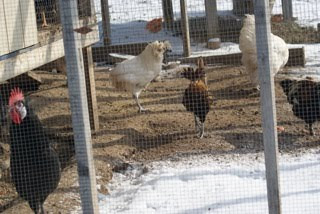
Our chickens! The hens produce eggs almost year around (they take a short break in late December- January) and the roosters are used as well (spiritually and for food). We could stimulate the chickens with false light to lay eggs year around but we know that allowing them to live in their natural cycle keeps them healthier and happier and ultimately more productive, and the eggs and meat are healthier for our well being. The taste of the eggs bring many of our Older Relatives back to their old memories of rural life and to their memories of eating farm eggs when they were children in Boriken or elsewhere. The taste of the chicken itself is much more "gamey" than your typical store bought chicken. The tastes are miles apart and the flesh itself is much healthier and densely nutritious than the market chicken. When someone in our family falls sick we go out grab a rooster or older chicken, hand process it, and throw it in the pot with potatoes, onions, winter squash (all from the garden) as well as medicinal herbs, lots of garlic to give us a nutritious and warming meal! The chickens also eat all the kitchen scraps as well as worms from the garden, any insects, any unwelcome garden grubs, slugs or bugs. They also eat ticks. Since we have had the chickens the tick population has decreased dramatically because we let our chickens free range once summer comes around and the hawks and foxes are less hungry.

One of our outdoor grills fired up ready to cook. We appreciate the fact that even though we only cook outside in winter on rare occasions, we always could if we needed to. Our indoor stove is propane, but if for whatever reason we could not get the propane or the propane was unavailable or became astronomically expensive we could easily cook our meals outside.
Buffalo meat cooking with peppers and onions from the garden. We eat vegetarian meals primarily but approximately twice a week we cook some meat, buffalo, chicken, lamb, goat. We especially like the buffalo and appreciate that buffalo tend to be raised primarily on pasture (unlike most beef) and so the quality of meet is consistently higher and healthier (although more expensive). We also honor and appreciate the Spirit of the Buffalo which is a very powerful spirit and it is especially good for those who are weak in Spirit to occasionally eat Buffalo even if they are "vegetarian".

A pot cooking on the grill of a mixture of squash, potatoes and onions. Every variety of potato has a unique taste, as does every variety of squash, and a unique texture. We like to mix them all up then compare all the different flavors as we eat them. Our daughter has her own names for certain potatoes like "the creamy potato" the "butter potato". By eating different varieties not only do we provide different tastes for our taste buds but we take in different spiritual properties and energies which in turn work on our mental body to expand our mental capacity and perspective. We especially seek out heirloom and Indigenous Varieties for their great flavor, connection the Ancestors, and because many of those seeds are rare and in danger of extinction and by growing them we help to prevent their extinction.
A summer meal, buffalo with onion and pepper, two varieties of potato with whole garlic cloves cooked in olive oil and herbs from the land, and a Tomato and scallion salad with basil.
These two dishes are the purple potatoes (above and fish with onions and herbs (below). You can get a good look at the purple flesh of the potatoes and their dark purple skins!
Eating from the Land where we live is more than just convenient, economically sensible and fun, it is allowing us to take in some of the Soil's properties where we are living, harmonizing us with the environment where we live. This is very different than taking in the properties from a factory farm or large plantation type farm thousands of miles away from us. We take in the Spirit of the Land herself in minute quantities when we eat from the Land. This is very important to us as Paleros and as Tainos and as People who love "Atabey" Mother Earth. Spiritually it is very significant and it is also significant when we can utilize animals or fruits and vegetables to give the Nkisis and Cemis which have come from the Land herself. There is a significant difference!


Cafe! Important to us all Muerto y Vivo! On this day it began to snow but did not interfere with the process or cooking that was about to take place. All the wood for the grills comes from the Land herself, and we are not just taking wood, we are also replacing it with new live saplings. So all this wood is sustainably harvested and does not represent net CO2 emissions into the climate. Wood after all is a renewable resource! The ashes from all the fires is collected and used for both spiritual purposes and to add to the gardens for fertility. Last year we found tobacco seedlings growing from our Ceremonial fire's ashes that sprouted from the tobacco we grew the year before that we used to make offerings to the fire. We transplanted the seedlings to the tobacco garden where they flourished and produced tobacco which is now drying to be used next year!
The wood that is placed on the fire comes from a tree that has died or a branch that fell off a tree in a storm or a tree that was harvested for whatever reason. The wood is often from a tree that has been around for 30-50 years and has been a witness to much upon the Land. Many animals built their home in the tree, ate from the tree, urinate, defecated on the tree, or even died on or within the tree. Woodpeckers poked holes in the tree, bugs made special tracks in the tree, worms ate the tree and much more. The tree took in many rains, many winds, and many rays of the Sun and took in the flashes of lightning and sounds of thunder and storms that passed by it. The tree took in the snows and the many minerals from the soil. In other words the tree has taken in energies from all the Mpungos! This tree is now put on the fire, the flames start to release the spirit of all this by using the oxygen in the air that is present, and the material essence and spiritual properties of all these spirits is left in the ash. When this ash is for example placed ceremonially upon a Baton (ancestral staff) all this spiritual energy is given to the Baton and brings the Spirit of that Baton to "Life".

The fire and behind it Lucerito's Monanso (hut). The hut is made from sections of tree trunk which all have a spiritual property to them. What better way to a make a Palero's Monanso? Palo of course meaning TREE!